Introduction
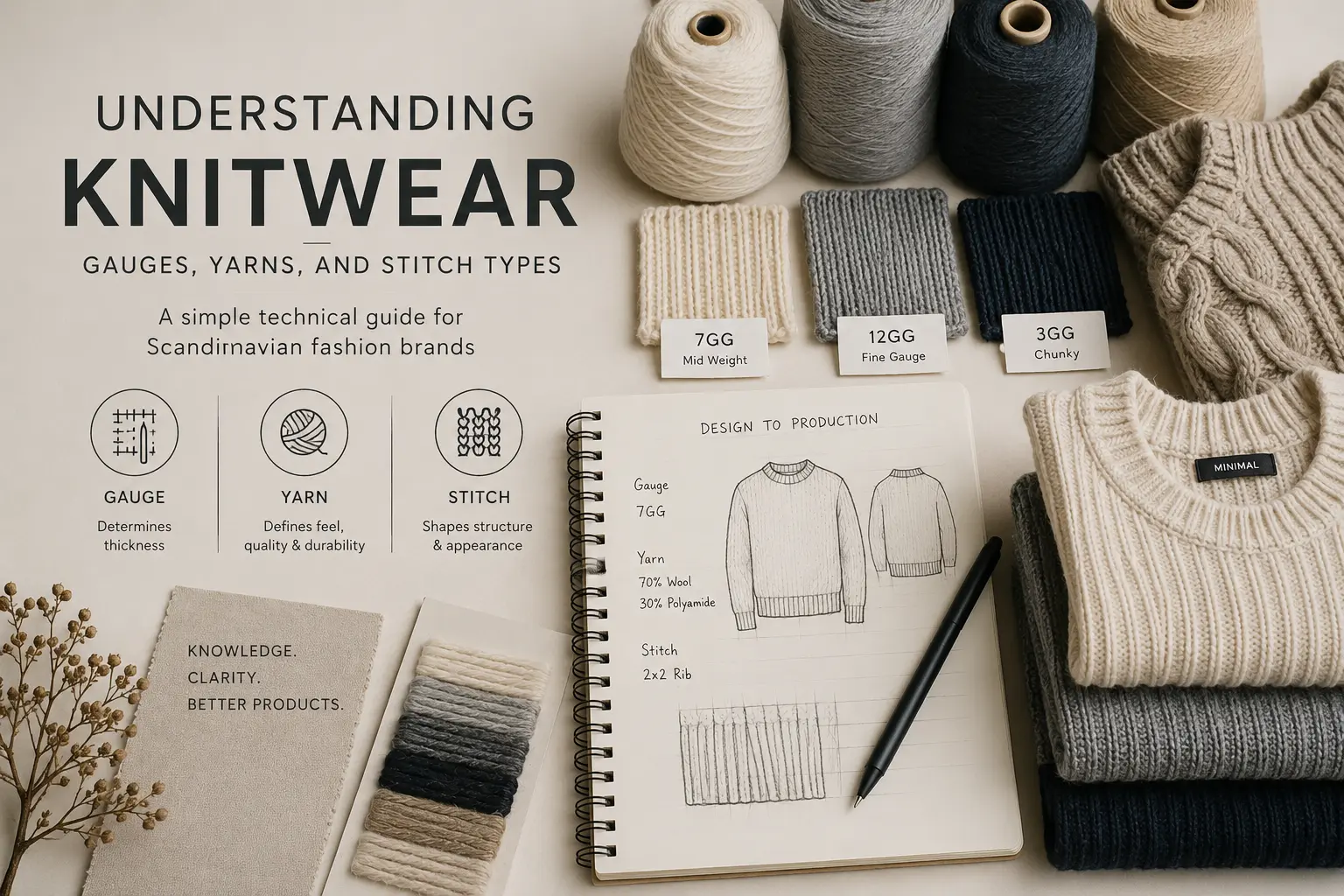
Knitwear is one of the most expressive categories in fashion, yet also one of the most misunderstood. For many emerging European and Scandinavian brands, terms like 7GG, 2/30Nm, or 1x1 rib can feel technical and fragmented.
However, these elements are not complex once understood. In fact, they are the foundation of how knitwear behaves, feels, and performs in real life.
This guide simplifies the essential building blocks of knitwear: gauge, yarn, and stitch structure, helping brands make more informed design and sourcing decisions.
1. What is Gauge in Knitwear?
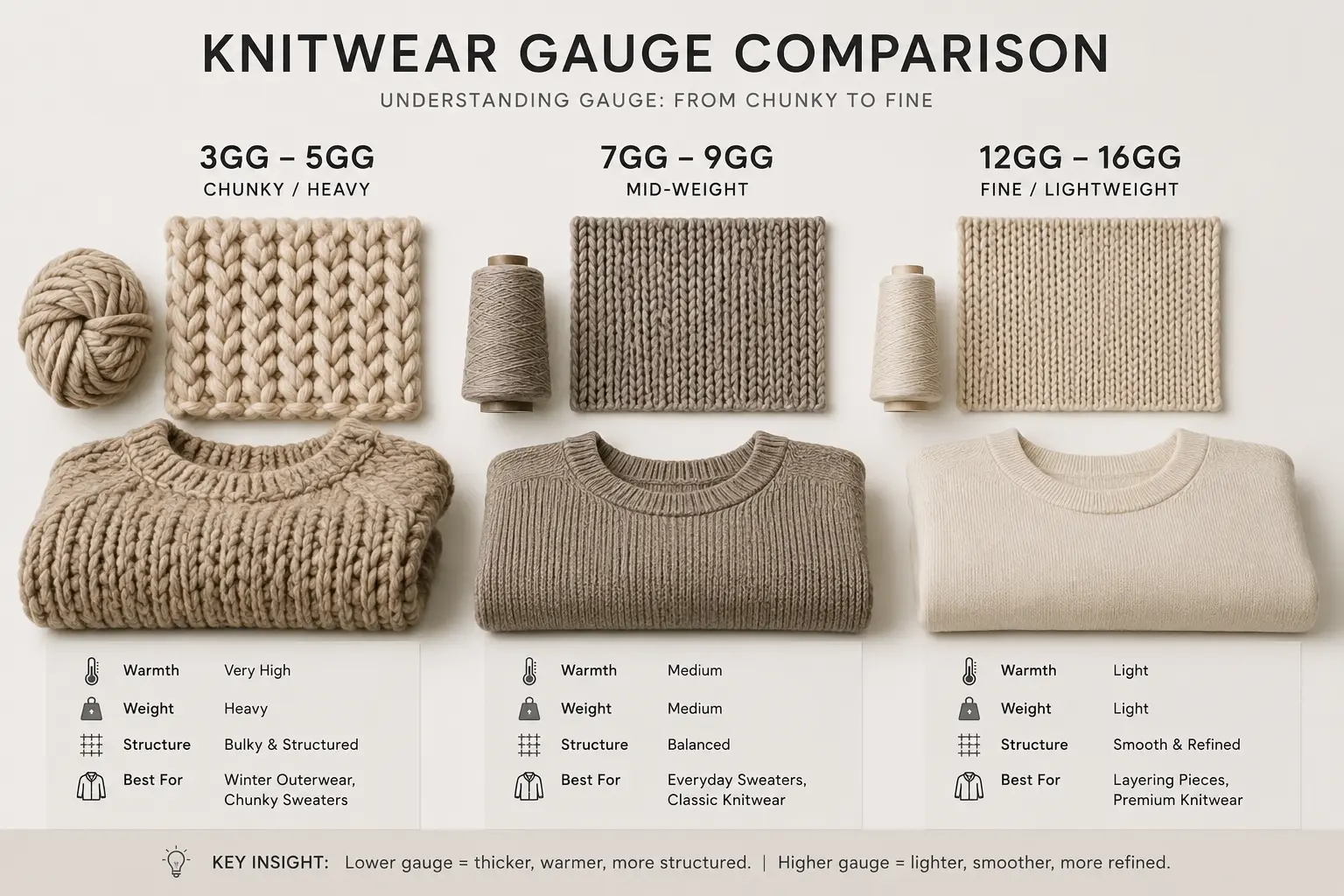
Gauge refers to the number of needles per inch on a knitting machine. In simple terms, it determines how fine or heavy a knitted fabric will be.
- 3GG–5GG → Chunky, heavy knits
- 7GG–9GG → Mid-weight sweaters
- 12GG–16GG → Fine lightweight knitwear
Lower gauge = thicker and warmer
Higher gauge = lighter and more refined
2. Yarn Types and Blends
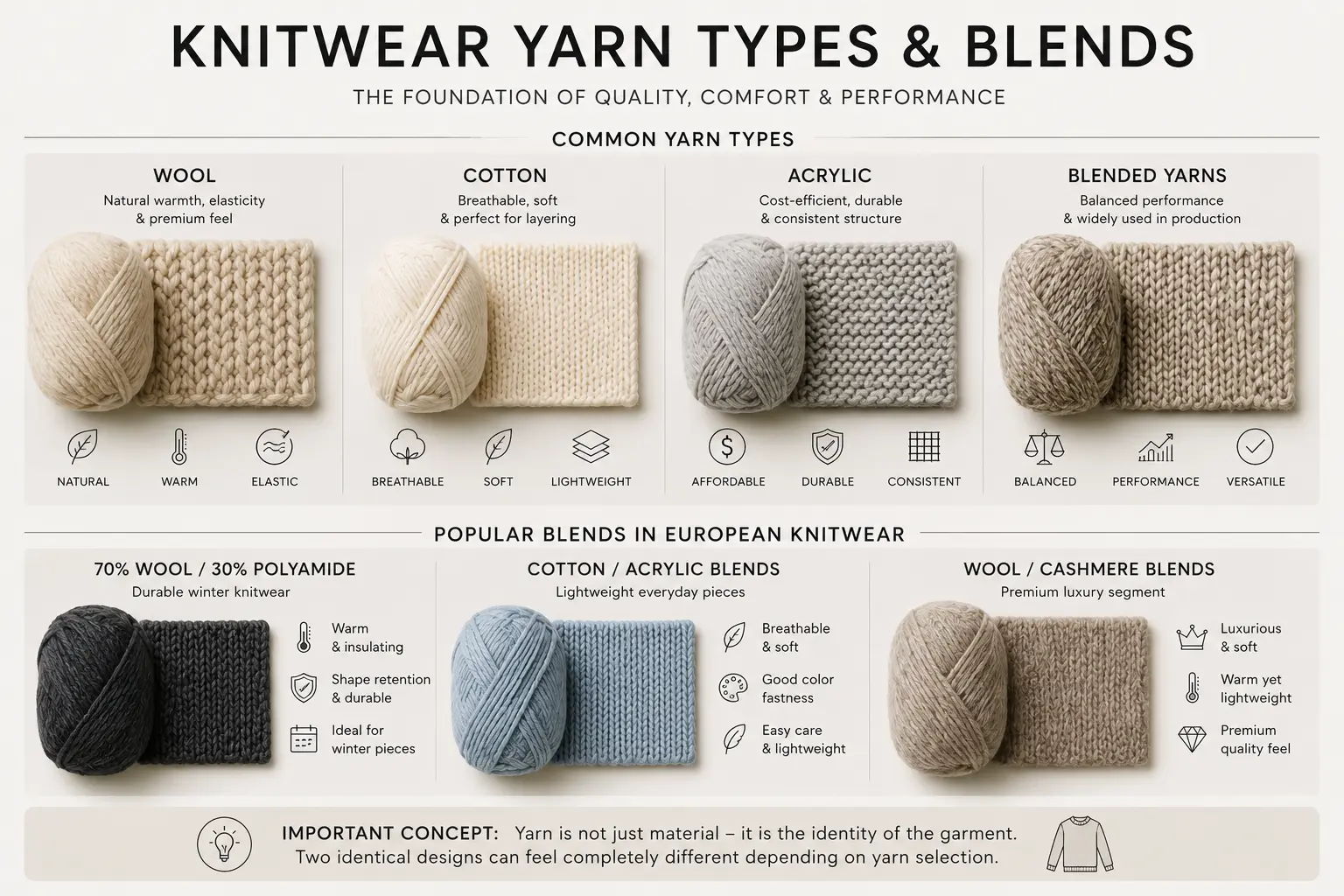
Yarn defines appearance, durability, comfort, and sustainability.
- Wool → Warm and premium
- Cotton → Breathable and soft
- Acrylic → Cost efficient and stable
- Blended yarns → Balanced performance
3. Stitch Types
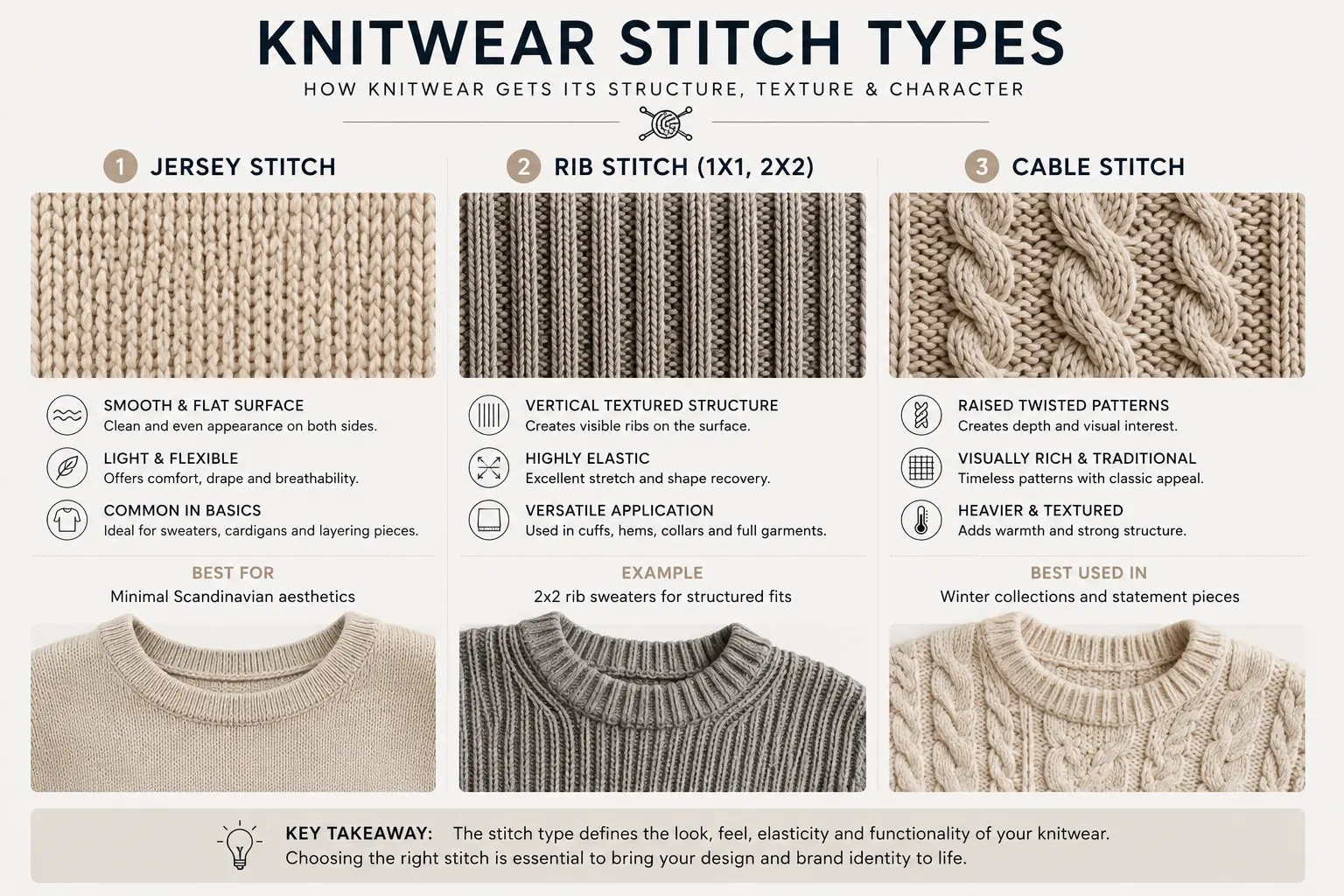
Jersey Stitch
Smooth and lightweight. Common in modern minimalist knitwear.
Rib Stitch
Elastic and structured. Often used in cuffs and full garments.
Cable Stitch
Textured and visually rich. Popular in winter collections.
4. How These Elements Work Together
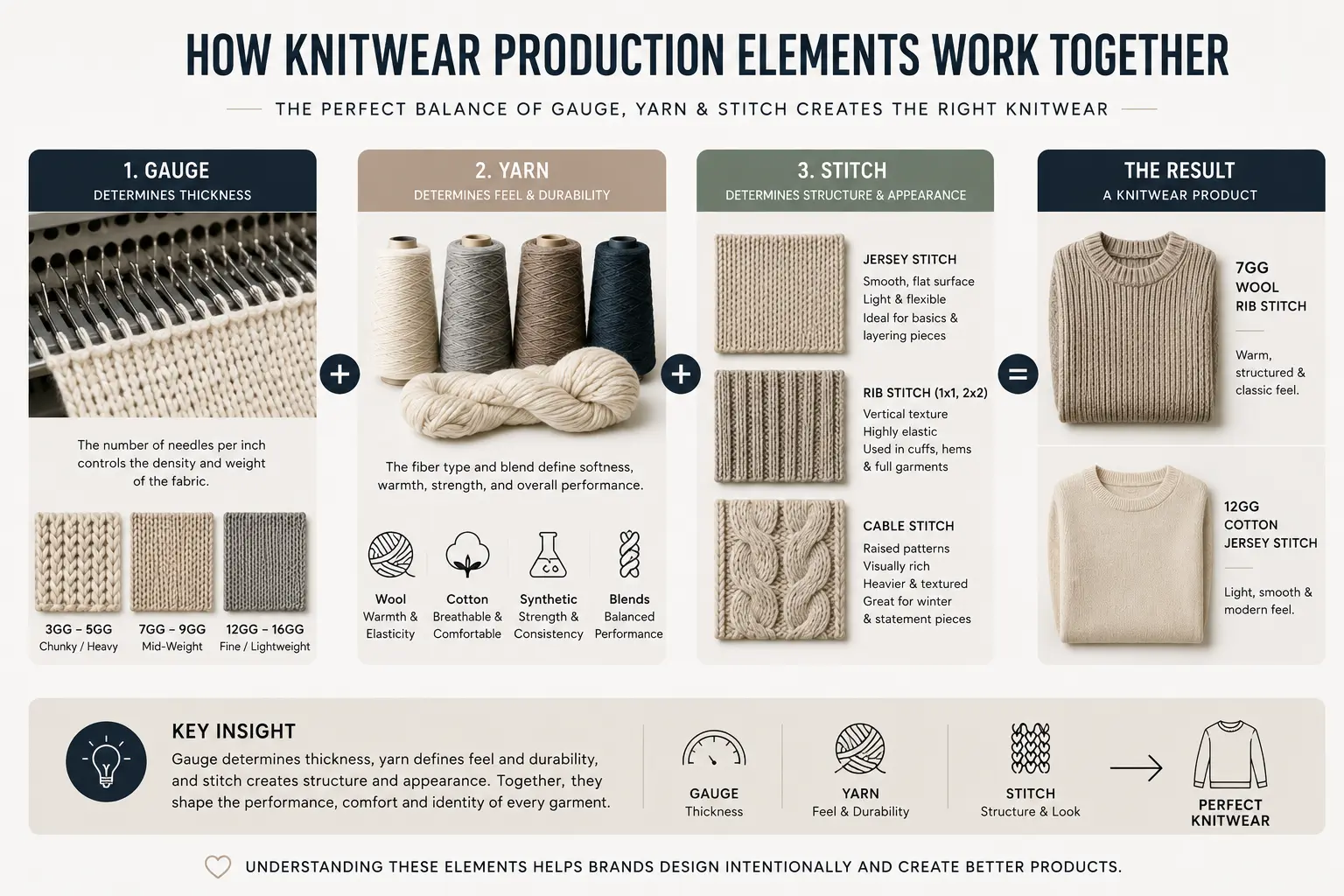
A knitwear product is created through the combination of gauge, yarn, and stitch structure.
- Gauge determines thickness
- Yarn determines feel and durability
- Stitch determines appearance and structure
5. Why This Matters for Scandinavian Brands
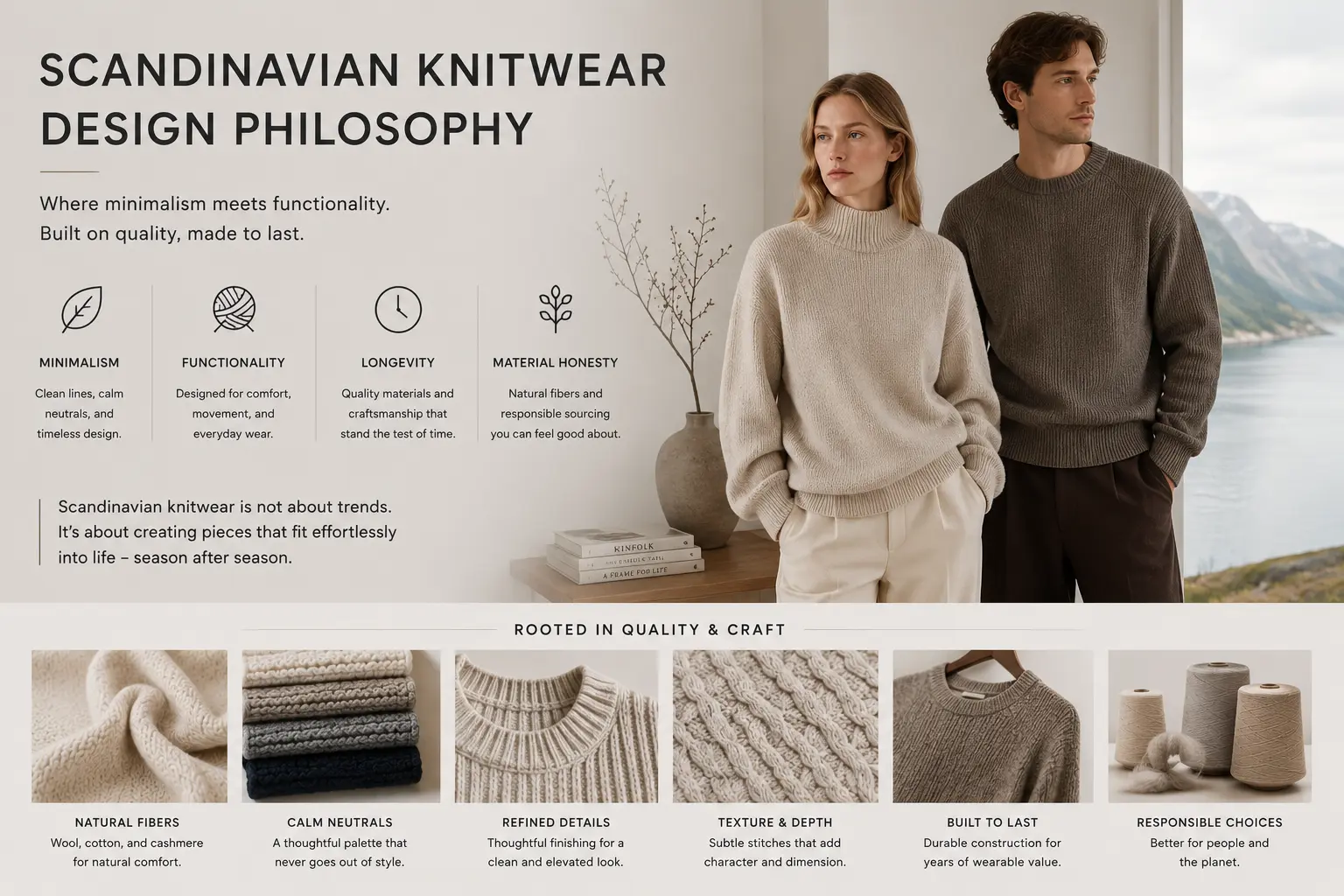
Scandinavian fashion values minimalism, functionality, longevity, and material honesty.
Understanding knitwear fundamentals helps brands communicate more clearly with suppliers and improve product consistency.
6. From Knowledge to Execution
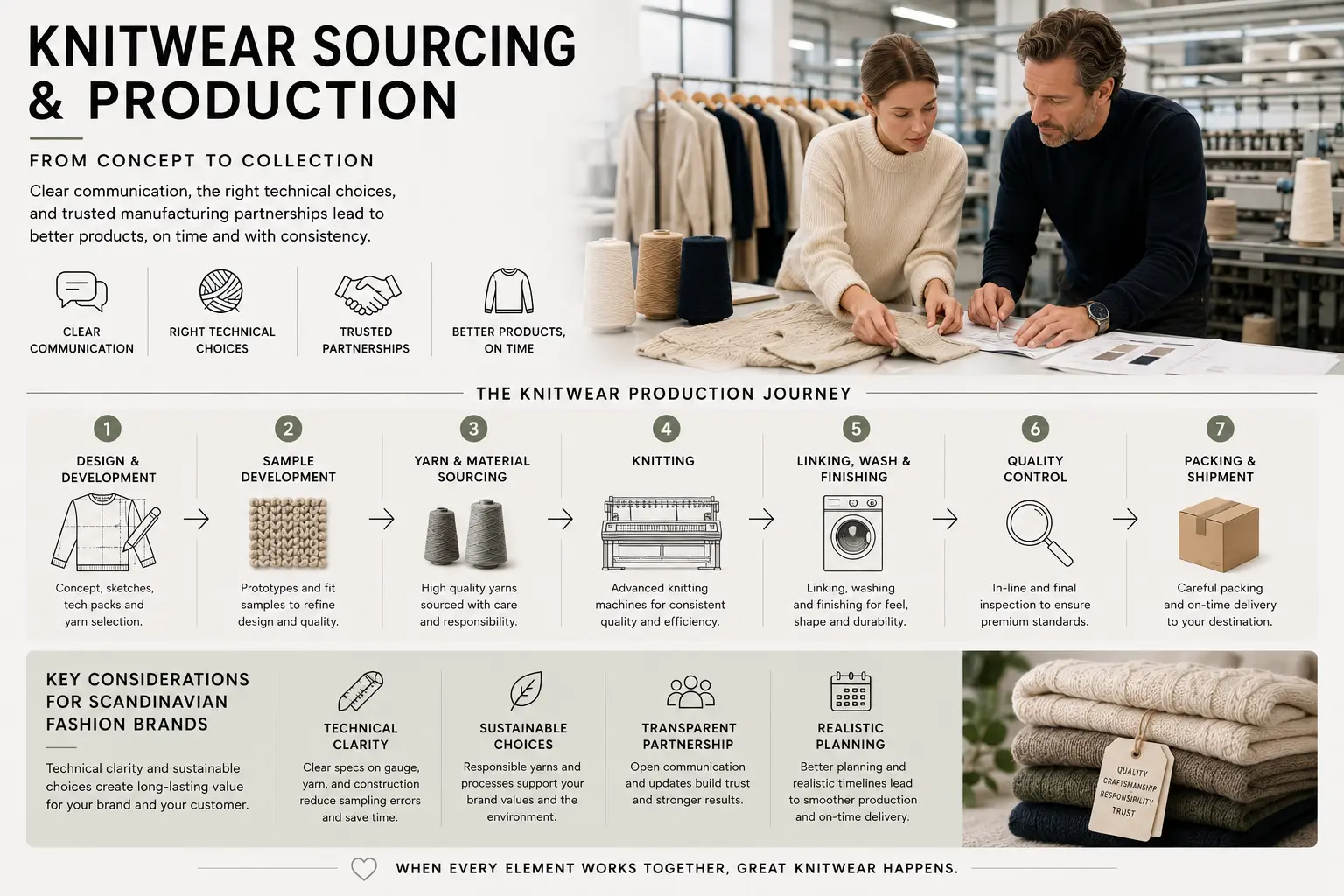
Technical clarity leads to faster development cycles, fewer sampling errors, and more reliable production outcomes.
In modern sourcing environments, clarity is efficiency.
Conclusion
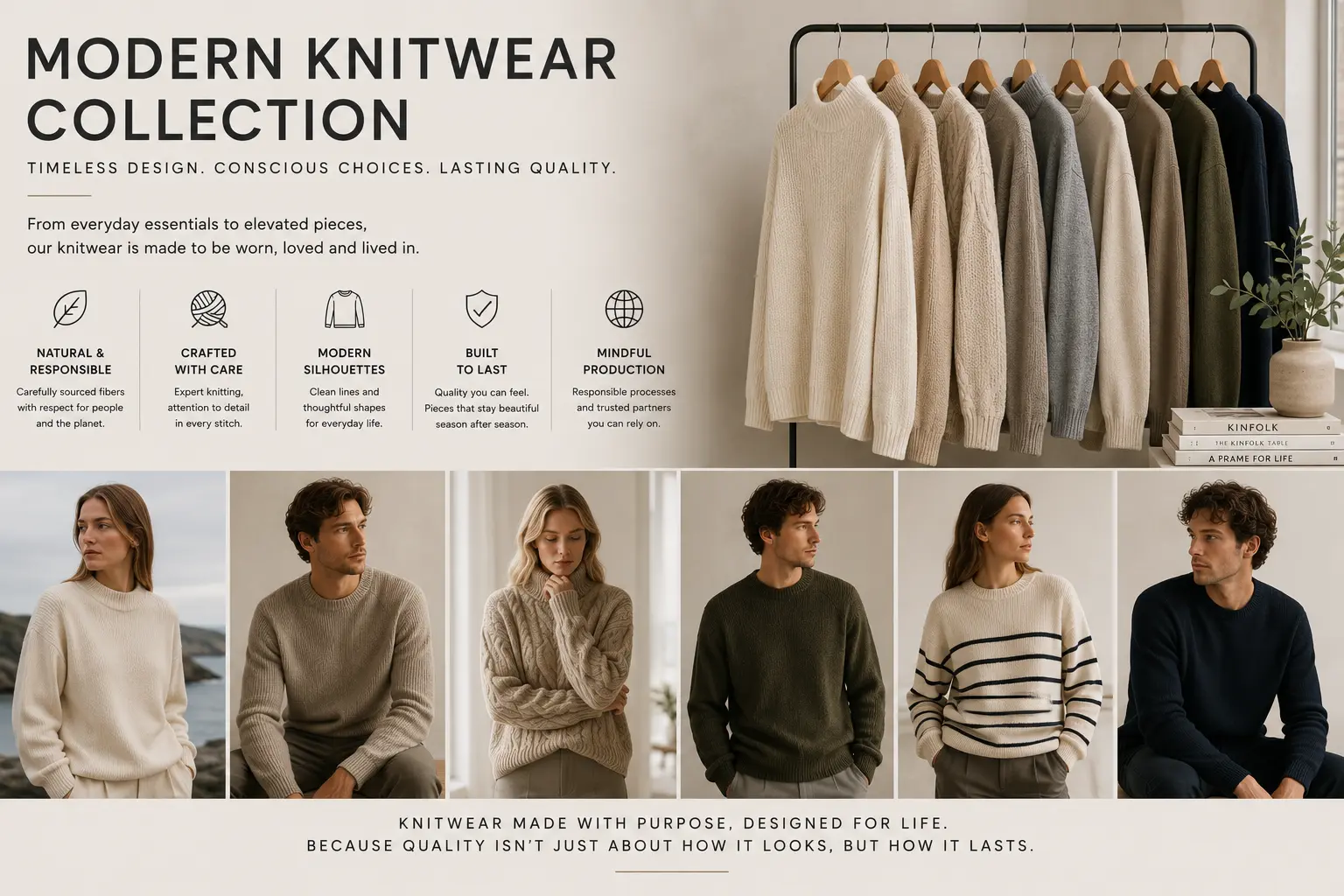
Once the fundamentals of gauge, yarn, and stitch types are understood, brands gain greater control over design, quality, and production outcomes.
Strong knitwear collections are not defined by trends alone, but by how well technical decisions align with design intent.