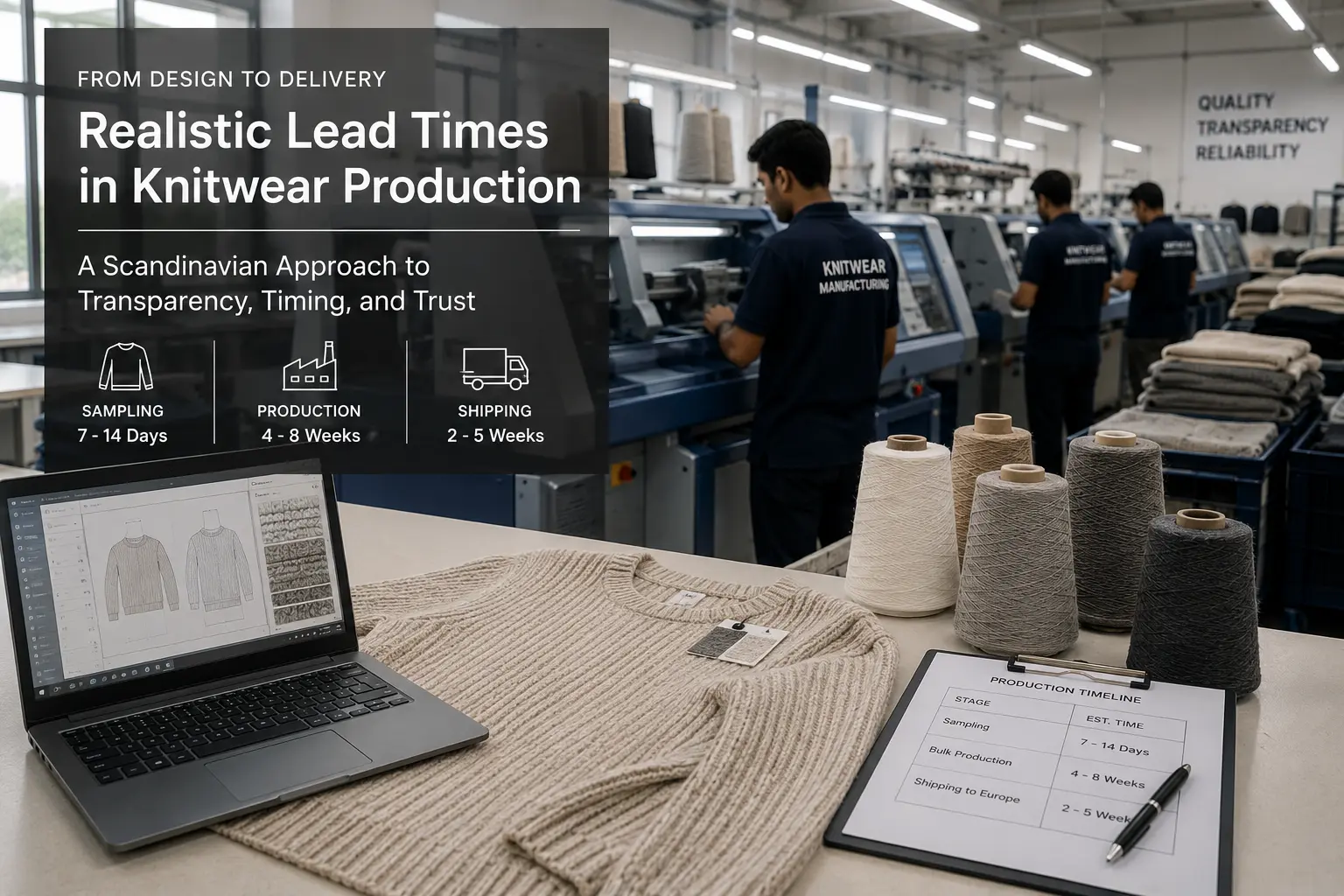
Knitwear Production
A Scandinavian approach to transparency, timing, and trust in sweater manufacturing and European fashion sourcing.
In European fashion sourcing, timing is not simply a logistical detail. For Scandinavian and European fashion brands, production timelines directly influence seasonal launches, retail commitments, and collection planning.
Knitwear production requires a structured development process, yet lead times are often misunderstood or communicated too optimistically. Understanding realistic production timelines allows brands to plan more accurately and reduce sourcing risks.
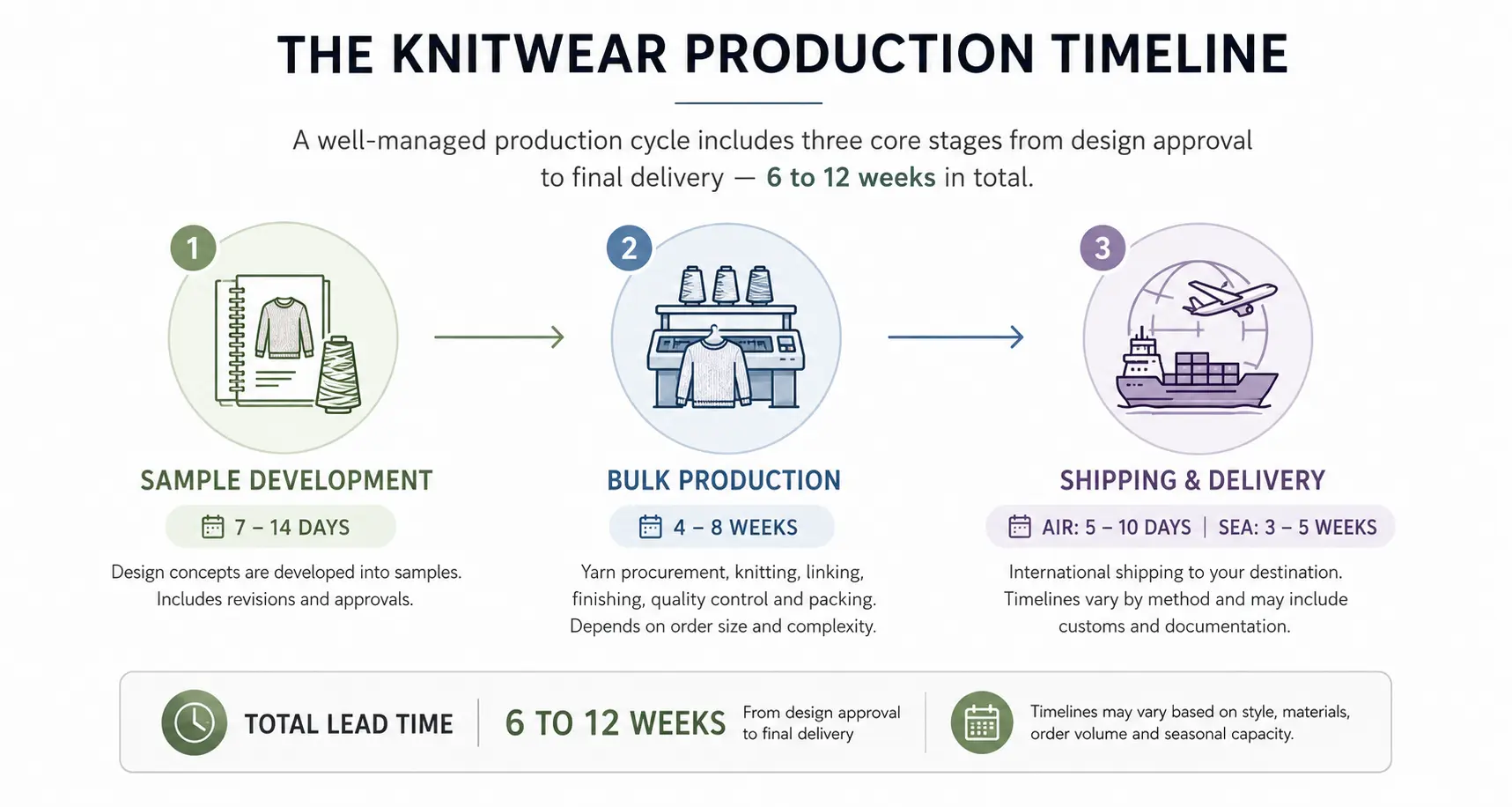
Structured production planning improves delivery reliability and minimizes sourcing delays.
A well-managed knitwear production cycle typically includes three core stages: sample development, bulk production, and shipping. When properly organized, the complete process from design approval to final delivery usually takes between 6 to 12 weeks.
Understanding each stage helps fashion brands build more predictable sourcing calendars and avoid last-minute production pressure.
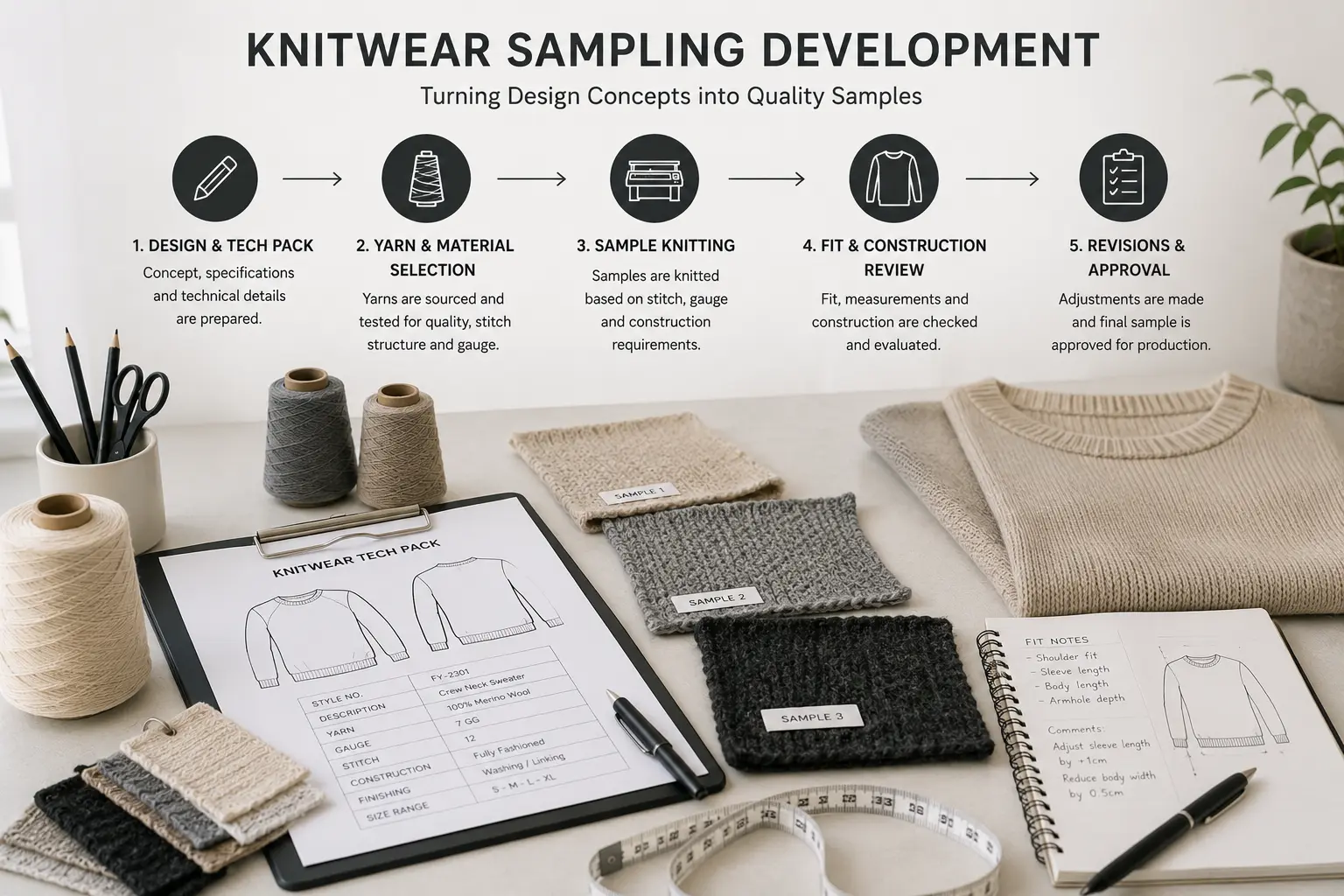
Accurate tech packs and material planning significantly improve sampling efficiency.
The first stage of knitwear production is sample development, where design concepts are translated into physical garments. Basic development samples generally require 7–10 days, while revisions and corrections may require additional time.
Sampling timelines depend heavily on yarn sourcing, stitch structure, gauge specifications, and technical accuracy. Delays often occur when tech packs are incomplete or design revisions are introduced mid-process.
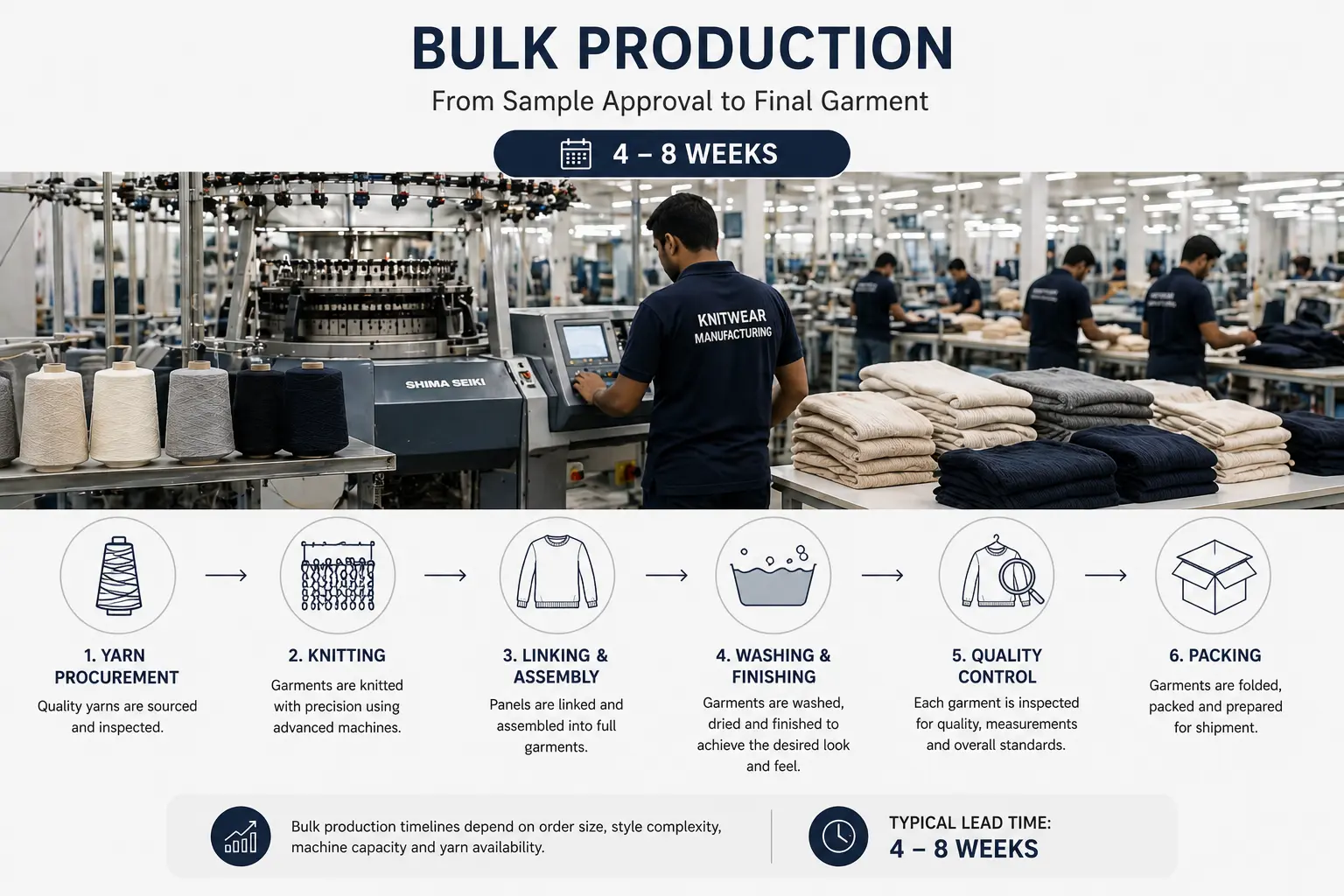
Bulk production efficiency depends on machine capacity, yarn availability, and production planning.
Once samples are approved, bulk production begins through yarn procurement, knitting, linking, finishing, quality control, and packing.
Small to medium production orders typically require 4–6 weeks, while more complex knitwear styles or higher-volume programs may require up to 8 weeks depending on factory scheduling and yarn lead times.

International logistics planning plays a major role in successful seasonal fashion delivery schedules.
Shipping timelines vary depending on logistics methods. Air freight usually requires 5–10 days, while sea freight generally takes 3–5 weeks for standard European deliveries.
Additional delays may occur due to customs clearance, documentation requirements, or shipment consolidation processes.
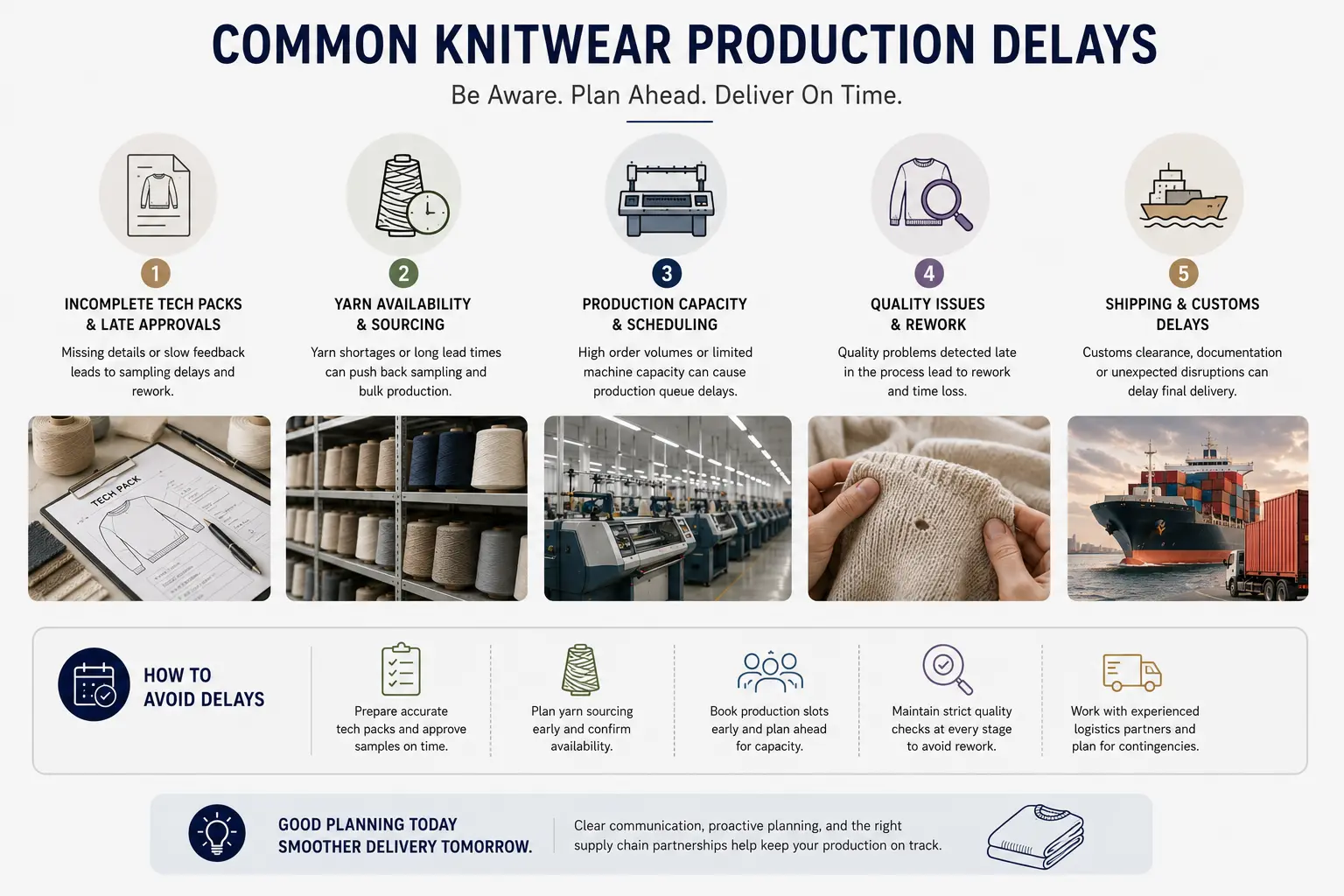
Most sourcing delays result from material planning, communication gaps, and production congestion.
Contrary to common assumptions, production delays rarely come from a single issue. Yarn sourcing delays, late design changes, sampling miscommunication, factory congestion during peak seasons, and slow approvals are among the most common causes.
In practice, material readiness and communication efficiency often influence delivery timelines more than production speed itself.
Fashion Yarn supports European fashion brands with structured production planning, sweater sourcing, sample development, quality assurance, and transparent manufacturing timelines from Bangladesh.
Contact Us